Tuesday, October 24, 2017

All the invisible things that connect us.


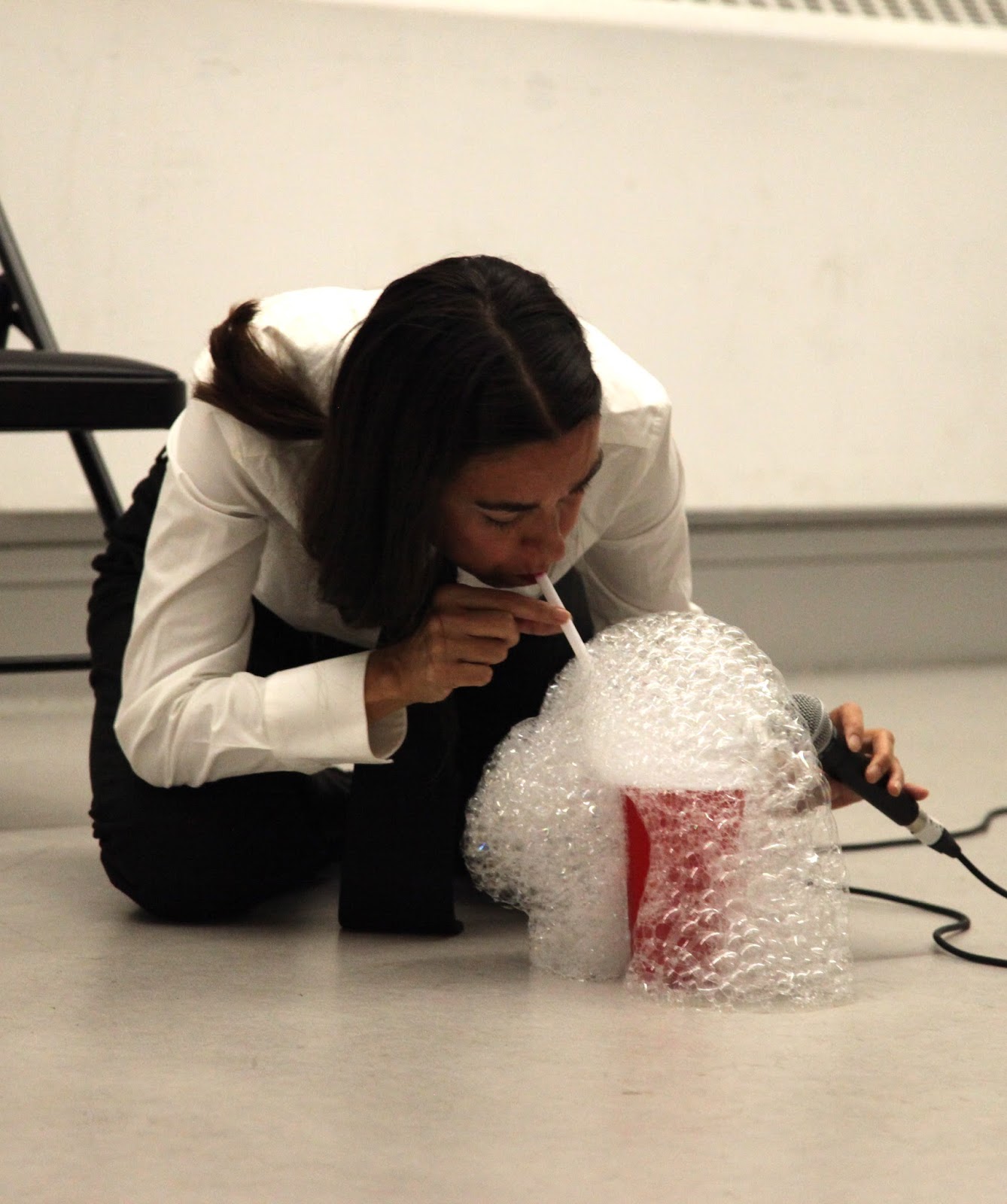
Following my exploration within the performance as an intervention with the audience, the piece explores the relationships established by human beings when they come in contact with each other. Deprived of visual and verbal contact (most common forms of communication). In this first piece of a series dedicated to the exploration of the intangible, I will invite the audience to join me in a two-day interactive project. (20 hours)


They explored topics such as intuition, empathy, cooperation and fear.

During two days and during working hours the artist was in a dark room, in the TEA(Tenerife Espacio de las artes). The public could enter freely one by one and with the condition of not establishing verbal contact with the artist (physical contact was allowed). The participants were instructed to take note of the assigned number and then leave their comments on the experience. The person wandered through the space until he or she met (or not) the artist.


Siguiendo mi trayectoria dentro del performance como intervención con la audiencia la pieza explora las relaciones que establecemos los seres humanos por el mero hecho de entrar en contacto los unos con los otros y privados de l contacto visual y verbal (formas de comunicación más habituales). En esta pieza primera de una serie dedicada a la exploración de lo intangible invitaré a la audiencia a unirse a mí en un proyecto interactivo de dos días de duración. (20 horas)
Se exploraron temas como la intuición, la empatía, la cooperación y el miedo.
Durante dos días y en horario laboral la artista estuvo en una sala oscura, en el TEA. El público podía entrar libremente de uno en uno y con la condición de no establecer contacto verbal con la artista aunque si se permitía el contacto físico. Los y las participantes eran instruídos de tomar nota del número asignado y luego dejar sus comentarios sobre la experiencia. La persona deambulaba por el espacio hasta que se encontraba o no a la artista.  


Saturday, October 29, 2016

Borradas, Erased, 2016


“Borradas” es una performance que se encuadra dentro de un proyecto más extenso de la artista denominado la “Manos escondidas” que hace referencia a la invisibilidad de la mujer en la Historia. Para esta pieza la artista trabaja la violencia que supone el hecho de borrar a las mujeres de la historia y negarles el reconocimiento a sus aportaciones al desarrollo de la Humanidad.


Photo: Thomas P. Proffe

Photo: Thomas P. Proffe

Photos: Thomas P. Proffe

Photos: Thomas P. Proffe

Photo: Nacho González Oramas

Photos: Thomas P. Proffe

Sunday, July 31, 2016

Missing 2016


Missing, 2016


 In this piece to be realize in Hamilton Ontario on October 11th the female character will be Elizabeth Catherine Bagshaw, physician (b near Cannington, Ont 18 Oct 1881; d at Hamilton, Ont 5 Jan 1982). She had a successful 60-year medical practice after graduating from University of Toronto (MB) in 1905, but is best known for her 30 years as medical director of the Hamilton Birth Control Clinic. Cheerful and courageous, she accepted the post in 1932 despite opposition from medical colleagues and local clergy and worked with dedicated volunteers to provide Hamilton women with inexpensive and reliable contraceptives. Bagshaw received numerous honours throughout her long life, including an honorary doctorate from McMaster.  Missing is the first of a number of projects dedicated to bring to public awareness the role of women in different communities all over the world. The public intervention consists in posting all over a town(in this case Hamilton) posters of a woman, asking if anybody knows who she is. A web site with an explanation about each woman is provided. The project serve as a way to generate awareness about important women in their communities as well as to have a statistic about how much people in the community really know about their existence and achievements. The idea is to open up a dialogue about why women work has gone unrecognized or underestimated and if there has been changes in this situation in the last decades.


Cuando claman los cristales, 2016


Cuando claman los cristales
Citizen participation has a lot to do with the ways we understand democracy and culture. Participation is much more than to vote periodically. It involves to create ways to allow the citizens to have a say in what is going on in their society allowing some empowerment. Once empowerment begins to grow we realize that we do have actually a voice and that we can change the things that happen around us.
This piece is a metaphor to that power we have, transparent but strong.

La participación ciudadana tiene mucho que ver con las formas en que entendamos la democracia y la cultura. Más allá del concepto simplista de votación cada cuatro años, la democracia implica un entramado estructural que permita el acceso de la ciudadanía a estructuras que permitan su empoderamiento. A medida que desarrollemos esta sensación de empoderamiento llegamos a la conclusión lógica de que nuestros pensamientos e ideas son de interés para los demás y que a través de ciertos mecanismos podríamos llevarlas a cabo. El sistema actual de democracia carece de esta estructura y se ha ido deformando para alimentar a una oligarquía arcaica y avariciosa que pone en peligro la mismísima existencia de la vida en nuestro planeta.
Si bien esto parece descaradamente lógico lo cierto es que las clases oligárquicas han negado esta posibilidad fomentando la creación de la idea de que sólo ellos están preparados para la labor de gobernar utilizando el rancio discurso del miedo y aprovechando las estructuras implantadas a través de la religión por el monoteísmo un funcionamiento jerárquico obsoleto que suele derivar en comportamientos corruptos. En nuestro país con una carencia estructural de procedimientos democráticos, amplias estructuras religiosas y con vestigios de una dictadura de casi medio siglo este procedimiento de democratización pasa por crear de la nada.
 En esta pieza de intervención en el espacio público queremos durante quince minutos trasladar a la calle el clamor de lo frágil de lo transparente del cristal…la voz de un barrio que sonara, sensible y acompasada pero también potente y resilente invade todos los espacios.


video images


Saturday, October 24, 2015

Trapos sucios, 2015


When we use the expression “Trapos sucios” in Spanish it relates in one hand to dirty clothes and in the other to secrets…secrets that you do not want anybody to know. The first presentation of this piece in Spain denounce the 1289 rapes that take place in the country every year and that have been communicated to the police and certified for a doctor. The experts believe that they are much more and that this number do not reflect the reality.
The silence of all the women that for different reasons (shame, guilt, pain, fear…) could not make a complaint is broken by the ones that can make it. Al over the world this negligible actions take place without a real outcry, hidden under the wait of hundreds of years of patriarchy.
Trapos sucios bring to the streets the secret keep in our societies, the secret of a terrible violence against women through the act of the rape. Trapos sucios take the streets to demand to the society to deal with this old and terrible form of violence, to be more aware of this serious problem and more action from our goverments to end once for all with this horrible practice.


"The king is dead long live the king", 2015

This performance piece part of the project "The king is dead, long live the king" is a piece presented in Toronto at Arstcape. The piece questions our understandings about democracy, power and relationships between them and the econmy.


Photos Ilse Gudino
Thanks to the support of CAAM, Colectivo Torornto and 
Alucine Film and Video Festival

INTRODUCCION

      rosa mesa art has been of a multidisciplinary nature from its begginnings exploring multirud of subjects and mediums but with a basic ...